Buying · Under Contract
The inspection contingency, what it actually protects buyers from
The inspection contingency gives the buyer the right to renegotiate, walk away, or accept the home as-is based on findings from a professional inspection. The exact rights vary by contract, and the negotiation that follows the inspection is where most under-contract drama happens.
Key takeaways
- The inspection contingency gives the buyer a defined period (typically 7–14 days after contract acceptance) to hire a professional inspector and either accept the property as-is, request repairs, or terminate the contract with earnest money returned.
- A general home inspection typically costs $300–600 and covers structure, roof, plumbing, electrical, HVAC, and major appliances; specialty inspections (sewer, radon, pest, mold, foundation, pool) are added separately.
- After the inspection the buyer typically has three response options, namely accept the property as-is, request repairs or a credit, or terminate the contract.
- Inspection-objection negotiation is one of the highest-stakes parts of the transaction, since most resale homes have findings and how the buyer and seller resolve them often determines whether the deal closes.
Quick answers
- What is an inspection contingency?
- An inspection contingency is a clause in a residential purchase contract that gives the buyer a defined window (typically 7-14 days) to have the home professionally inspected and to respond to the findings. Response options usually include terminating the contract with earnest money returned, requesting specific repairs, asking for a credit, or proceeding as-is.
- What does a home inspection actually cover?
- A standard home inspection is a visual, non-invasive examination of the structure, roof and attic, exterior, plumbing, electrical, HVAC, major appliances, and interior. It typically takes 2-4 hours. It doesn't cover pests, sewer lines, radon, mold, asbestos, wells, septic, or specialty systems (pools, fireplaces) — those require separate specialist inspections, often during the same contingency window.
- What can a buyer do with inspection findings?
- Buyers typically have three response options. They can ask the seller to fix specific big-ticket items before closing, ask for a credit (price reduction or closing-cost contribution) in lieu of repairs, or accept the home as-is. The seller can agree, counter, or refuse. Negotiation patterns depend on market conditions, the specific issues, and the contract's framework (some contracts use "objections and resolutions"; others limit the buyer to terminate-or-accept).
The inspection contingency gives a homebuyer a defined window (typically 7-14 days from contract acceptance) to have the home professionally inspected and to respond to the findings: walk away with earnest money intact, request specific repairs, ask for a credit, or accept the home as-is. The exact rights vary by contract form, and the negotiation that follows the inspection is where most under-contract drama happens.
The standard residential purchase contract includes three buyer-protective contingencies (financing, inspection, and appraisal) and the inspection contingency is usually the most actively used. The financing and appraisal contingencies tend to be either-or (they're either invoked or not), but the inspection contingency drives a more nuanced negotiation: the buyer gets the inspection report, identifies items they want addressed, and either walks away, accepts the home as-is, or proposes terms to the seller.
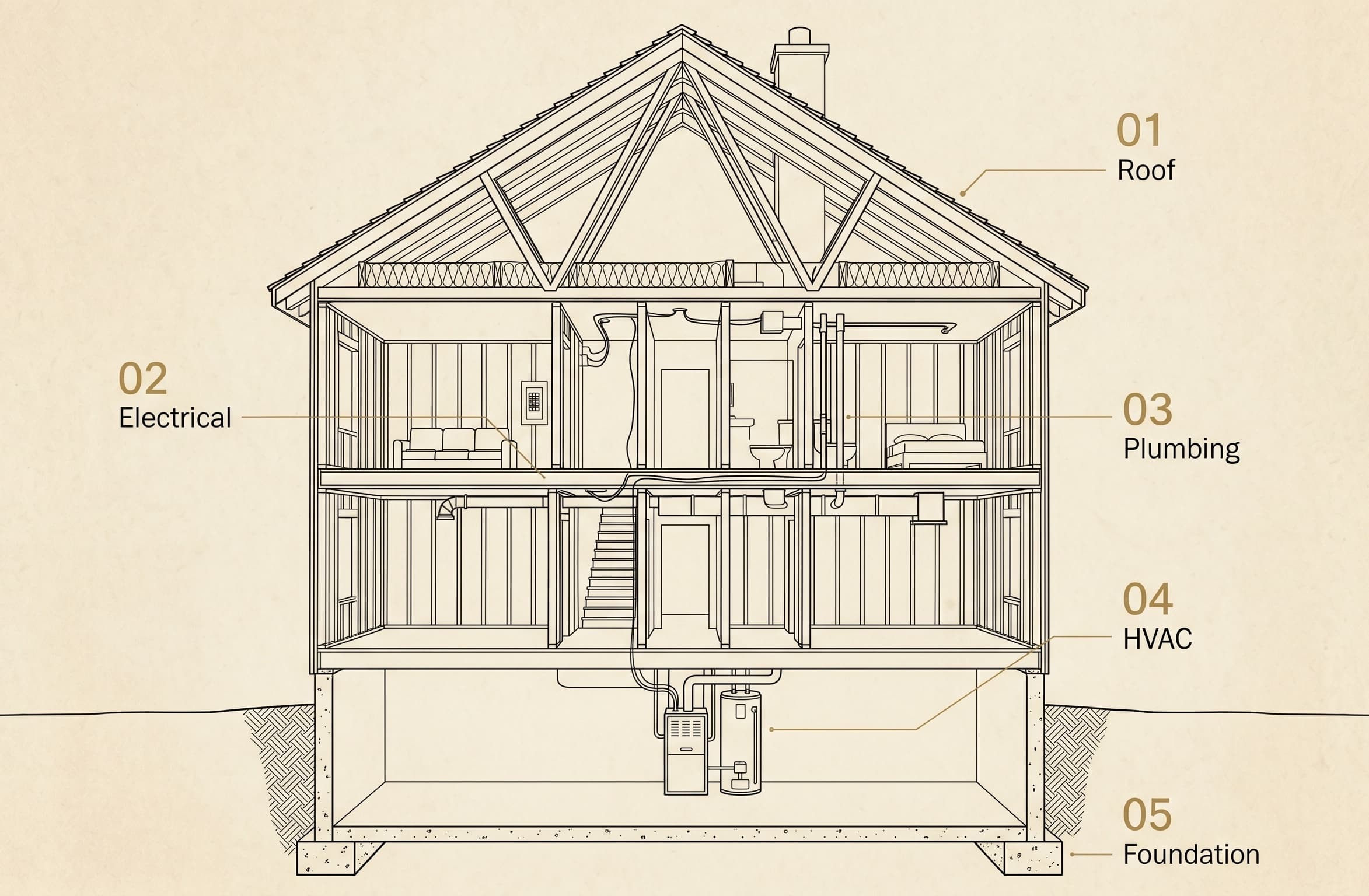
What a general inspector evaluates, in one cutaway. Five systems, each with its own decision-making implication for the buyer.
Real Estate Field Guide illustration
What the contingency actually does
In standard form, the inspection contingency gives the buyer a defined window (typically 7–14 days from contract acceptance) to have the property professionally inspected and to respond to the findings. The buyer's response options usually include: terminate the contract and recover the earnest money; request that the seller make specific repairs before closing; request a credit (a price reduction or a closing-cost contribution) in lieu of repairs; or remove the contingency and proceed without changes.1
The exact mechanics vary by state and by contract form. Some contracts use an "as-is" framework where the buyer can only terminate, not renegotiate. Others use a more flexible "objections and resolutions" framework. The contract language is the binding document, what the buyer can do depends on what the contract says they can do.
What an inspection actually covers
A home inspection is a visual, non-invasive examination of the major systems and structural components of the home, typically performed in 2–4 hours by a licensed inspector. The standard scope is defined by industry practice and varies by jurisdiction; the InterNACHI Standards of Practice are widely used as a baseline.3
Typical scope includes: the structure (foundation, framing, walls), the roof and attic, the exterior (siding, windows, drainage, decks/porches), the plumbing system, the electrical system, the HVAC system, the major appliances, and the interior (floors, walls, ceilings). The inspector reports observable defects and items needing further evaluation; they don't open walls, dig into the foundation, or comment on cosmetic preferences.
The standard inspection does not typically cover: pests (separate pest inspection), sewer line condition (separate sewer scope), radon (separate test), mold (separate testing), asbestos (separate testing), wells and septic (separate inspections), or specialty systems (pools, fireplaces, chimneys may need specialists). The buyer can order any of these as additional inspections, often during the same contingency window.
What buyers actually do with inspection findings
Inspection reports are usually long (30–80 pages is common) and most of the items are minor. The inspector flags everything they observe, including cosmetic issues and items that are functional but worth noting. The right way to read the report is as a list of issues sorted by financial significance, then by safety significance.
Buyers typically respond to inspection findings in one of three ways. The first is to ask the seller to fix specific big-ticket items before closing, a failed roof, a foundation crack that needs structural attention, a furnace at end of life. The second is to ask for a credit in lieu of repairs, which gives the buyer the option to address the items themselves with their own contractors after closing. The third is to accept the home as-is, sometimes after using the report to inform their own post-closing maintenance plan.
The seller's side, on receiving the buyer's response, can agree, counter, or refuse. The most common pattern is some form of negotiation, the buyer asks for a $20,000 credit, the seller offers $8,000, the parties land at $12,000. Whether the negotiation proceeds smoothly depends on the market (in seller's markets, sellers often refuse all but the most material findings; in buyer's markets, sellers often accept reasonable requests), the relationship between the agents, and the specific issues in question.
What "as-is" actually means
When a property is listed as-is, the seller is signaling that they're not inclined to make repairs or credits regardless of inspection findings. As-is doesn't mean the buyer can't have an inspection, it means the buyer's options after the inspection are typically limited to accepting the home as it is, or terminating under the contingency. The contingency window usually still applies; the seller just isn't agreeing in advance to negotiate on findings.
As-is listings are common in three situations: estate sales, foreclosures and bank-owned properties, and properties where the seller doesn't want to deal with the negotiation overhead of repairs. The discount on as-is properties typically reflects the buyer's expected post-closing repair work; in some markets, that discount is substantial enough to make as-is properties attractive to investors and renovation-comfortable buyers.
A reasonable frame
The inspection contingency is the buyer's most flexible tool during the under-contract period. It surfaces information about the property that wasn't visible at tour, and it creates a structured negotiation moment for handling what the inspection finds. Buyers who use it well, by having a professional inspection, reading the report carefully, and prioritizing requests that are material rather than cosmetic, typically get to a better outcome than buyers who either skip the inspection entirely or treat the report as a list of demands.
The contingency is also where deals fall apart that probably should fall apart. An inspection that surfaces a major foundation issue, a failed roof, or significant water damage gives the buyer the chance to walk away from a property that's likely to consume cash and time well past what the price reflected. That's the contingency working as intended.
Frequently asked
What is an inspection contingency?
An inspection contingency is a clause in a residential purchase contract that gives the buyer a defined window (typically 7-14 days) to have the home professionally inspected and to respond to the findings. Response options usually include terminating the contract with earnest money returned, requesting specific repairs, asking for a credit, or proceeding as-is.What does a home inspection actually cover?
A standard home inspection is a visual, non-invasive examination of the structure, roof and attic, exterior, plumbing, electrical, HVAC, major appliances, and interior. It typically takes 2-4 hours. It doesn't cover pests, sewer lines, radon, mold, asbestos, wells, septic, or specialty systems (pools, fireplaces) — those require separate specialist inspections, often during the same contingency window.What can a buyer do with inspection findings?
Buyers typically have three response options. They can ask the seller to fix specific big-ticket items before closing, ask for a credit (price reduction or closing-cost contribution) in lieu of repairs, or accept the home as-is. The seller can agree, counter, or refuse. Negotiation patterns depend on market conditions, the specific issues, and the contract's framework (some contracts use "objections and resolutions"; others limit the buyer to terminate-or-accept).What does buying "as-is" actually mean?
An as-is sale means the seller won't make repairs or offer credits for inspection findings. It doesn't waive the buyer's right to inspect or to terminate within the contingency window if findings are material. As-is is common on estate sales, foreclosures, and properties marketed as fixer-uppers; the price typically reflects the buyer taking on repair risk.How long is the inspection contingency period?
Inspection periods are set in the contract, typically 7-14 days from acceptance, sometimes shorter in tight markets and longer for vacation homes or unusual properties. The window covers the inspection itself, the buyer's review of the report, any specialist follow-ups, and the negotiation with the seller. Missing the deadline usually means the contingency is deemed satisfied and the buyer loses the right to walk away over inspection findings.