Learning · General
What title insurance is, and what it actually covers
Title insurance is the only insurance product that pays for problems that already existed at closing but nobody noticed. The structure is unusual, the cost is paid once, and the coverage matters more than most buyers realize.
Key takeaways
- Title insurance protects against defects in the chain of ownership (forged deeds, undisclosed heirs, missed liens, boundary disputes) that surface after closing, the kind of issues a title search may have missed.
- Two policies are typically issued at closing, an owner's policy that protects the buyer for as long as they own the property, plus a lender's policy that protects the lender's lien position and is required by lenders.
- Unlike most insurance, title insurance is paid as a one-time premium at closing; there is no annual renewal.
- Who pays for which policy varies by jurisdiction and is one of the largest line items in closing costs that varies state-to-state.
Quick answers
- What does title insurance cover?
- Title insurance covers ownership problems that already existed when a property changed hands but weren't discovered during the title search, undisclosed liens, forged signatures in the chain of ownership, missing heirs, mis-recorded deeds, and similar defects in the public record. The premium is paid once at closing, and the policy lasts as long as the buyer owns the home (or, for the lender's policy, as long as the loan is outstanding).
- What's the difference between owner's and lender's title insurance?
- Lender's title insurance protects the lender against defects that wipe out the mortgage lien; coverage is for the loan amount and decreases as principal is paid down. Owner's title insurance protects the buyer; coverage is for the purchase price and stays at that amount for the life of ownership. The lender's policy is required by the lender as a condition of funding; the owner's policy is technically optional in most states. Both are issued by the same title company at the same closing.
- What does an owner's title policy actually cover?
- Standard owner's title insurance covers forged deeds and mortgages earlier in the chain, undisclosed or missing heirs, errors and omissions in public records or the title search itself, missed liens (taxes, contractors, judgments) against prior owners, encroachments and boundary disputes the survey missed, and defective recordings. It typically does NOT cover zoning violations, building code violations, environmental hazards, or anything the buyer agreed to in writing before closing.
Title insurance covers ownership problems that already existed when a property changed hands but weren't discovered during the title search: undisclosed liens, forged signatures in the chain of ownership, missing heirs, mis-recorded deeds, and similar defects in the public record.1 The premium is paid once at closing, and the policy lasts as long as the buyer owns the home (or, for the lender's policy, as long as the loan is outstanding).
Most insurance covers things that might happen in the future. Title insurance is different in that it covers problems that already existed but nobody noticed. Most homebuyers encounter it as a line on the closing cost estimate and don't think about it again, but the mechanics are worth understanding because what the policy actually covers is more limited than the name suggests.
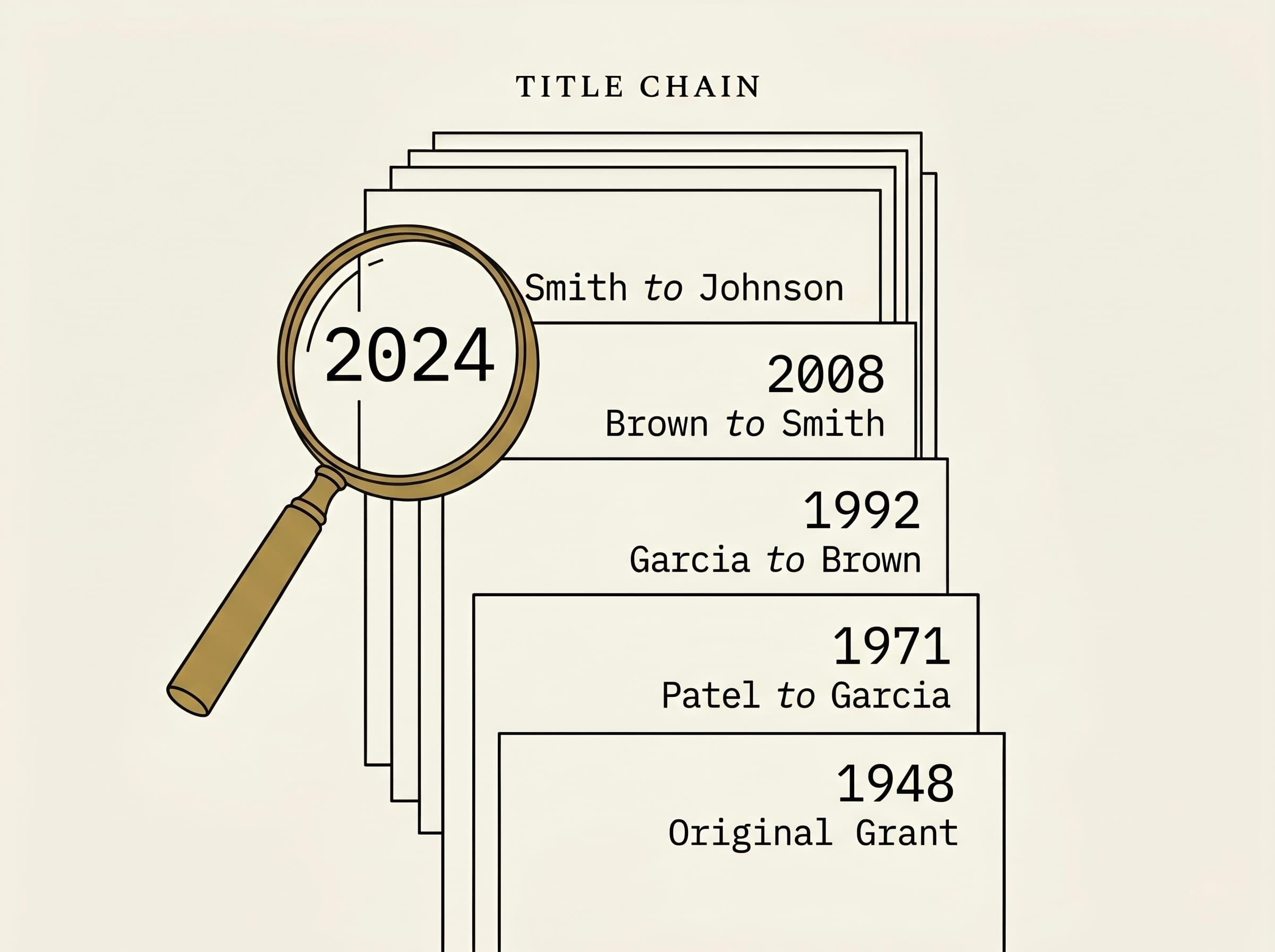
Every property has one. Each row is a single transfer, and a clean title means each transfer connects cleanly to the one above and below.
Real Estate Field Guide illustration
What "title" actually refers to
The title to a property is the legal record of who owns it and what claims exist against it. A clean title means the seller has the right to transfer ownership and there are no outstanding liens, easements, or competing claims that the buyer would inherit. The title search (usually performed by a title company or a real estate attorney before closing) examines public records (deeds, mortgages, tax liens, court judgments, divorce decrees, probate filings) to confirm the title is clean before the deed is transferred.
The search is thorough but not perfect. Records can be misfiled, signatures can be forged, prior owners can have undisclosed heirs, and judgments can be filed under variant name spellings. The title search catches the visible problems; title insurance covers the ones that come up later.
Two policies, two different interests
Almost every residential closing involves two title policies, often confused:2
- Lender's title insurance protects the lender, not the borrower. If a title defect emerges that wipes out the lender's lien, the policy makes the lender whole. The lender almost always requires this policy before funding the loan, and the buyer pays for it as a closing cost. Coverage is for the loan amount and decreases as the principal is paid down.
- Owner's title insurance protects the buyer. Coverage is for the purchase price and stays at that amount for the life of ownership. This policy is technically optional in most states, though some states require sellers to offer it. Without it, the buyer has no protection against title defects that survive the title search.
The two policies are issued by the same title company at the same closing. The lender's policy is required; the owner's policy is a buyer choice. The owner's policy is the one most buyers don't fully understand and sometimes decline to save a few hundred dollars, which is often a poor trade.
What the owner's policy actually covers
A standard owner's title insurance policy typically covers:3
- Forged deeds, mortgages, and releases earlier in the chain of title.
- Undisclosed or missing heirs claiming an ownership interest.
- Errors and omissions in the public records or in the title search itself.
- Liens for unpaid taxes, contractor work, or judgments against prior owners that the title search missed.
- Encroachments and boundary disputes that the survey missed.
- Defective recordings and improperly executed deeds.
What it does not typically cover: zoning violations, building code violations, environmental hazards, or anything the buyer agreed to in writing (an easement disclosed at closing, for instance). It also typically excludes things the buyer knew about and accepted before closing, the policy is for unknown defects, not known ones.
What it costs
Title insurance pricing varies significantly by state. A handful of states (Florida, New Mexico, Texas) have state-promulgated rates, meaning every title insurer charges the same premium for the same policy. In most other states, rates are filed by individual insurers and can vary.
Typical owner's title insurance premiums are 0.4% to 0.8% of the purchase price, paid once at closing. On a $400,000 home, that's $1,600 to $3,200. The lender's policy is usually less, since it covers the loan amount rather than the purchase price and decreases over time. In states that aren't rate-regulated, comparing two or three quotes is sometimes worth the effort.
The closing-costs estimator at /tools/closing-costs models both title-insurance lines and surfaces which states have promulgated rates.
A common gotcha
In states where the seller customarily pays for the owner's policy, buyers sometimes assume they're covered without realizing the lender's policy and the owner's policy are separate. They are. The lender's policy doesn't protect the homeowner. If the title-policy line on the closing statement shows only the lender's policy, the buyer is unprotected against post-closing title defects.
Whether the seller or the buyer pays for the owner's policy is a matter of state custom and contract negotiation. The closing statement is the document that confirms which policy is being issued and to whom.
Frequently asked
What does title insurance cover?
Title insurance covers ownership problems that already existed when a property changed hands but weren't discovered during the title search, undisclosed liens, forged signatures in the chain of ownership, missing heirs, mis-recorded deeds, and similar defects in the public record. The premium is paid once at closing, and the policy lasts as long as the buyer owns the home (or, for the lender's policy, as long as the loan is outstanding).What's the difference between owner's and lender's title insurance?
Lender's title insurance protects the lender against defects that wipe out the mortgage lien; coverage is for the loan amount and decreases as principal is paid down. Owner's title insurance protects the buyer; coverage is for the purchase price and stays at that amount for the life of ownership. The lender's policy is required by the lender as a condition of funding; the owner's policy is technically optional in most states. Both are issued by the same title company at the same closing.What does an owner's title policy actually cover?
Standard owner's title insurance covers forged deeds and mortgages earlier in the chain, undisclosed or missing heirs, errors and omissions in public records or the title search itself, missed liens (taxes, contractors, judgments) against prior owners, encroachments and boundary disputes the survey missed, and defective recordings. It typically does NOT cover zoning violations, building code violations, environmental hazards, or anything the buyer agreed to in writing before closing.How much does title insurance cost?
Owner's title insurance typically runs 0.4%–0.8% of the purchase price, paid once at closing. On a $400,000 home, that's $1,600–$3,200. The lender's policy is usually less because it covers the loan amount and decreases over time. A handful of states (Florida, New Mexico, Texas) have state-promulgated rates so every insurer charges the same; in most other states, rates are filed by individual insurers and shopping around can save money.